
If you’ve been hearing more about beef tallow lately, you’re not imagining things—it’s making a serious comeback. From traditional cooking fats to modern skincare routines, this old-school ingredient is suddenly everywhere again.
But what exactly is beef tallow, and why are people using it for everything from beef tallow for cooking to beef tallow for skin and even beef tallow for face routines?
In this guide, we’ll break it all down in a simple, human way—what it is, how it’s used, its benefits, and whether it actually deserves the hype.
What Is Beef Tallow?
Let’s start with the basics: what is beef tallow?
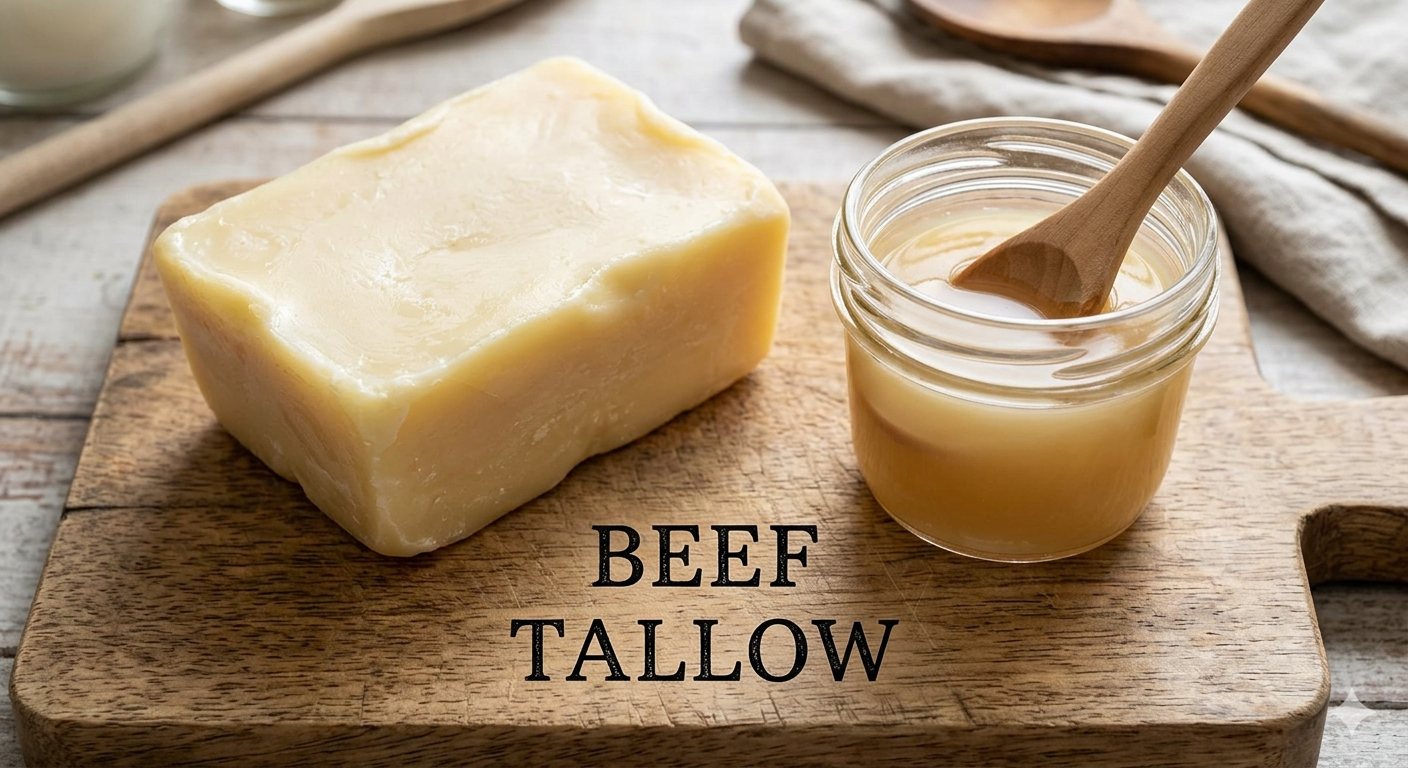
Beef tallow is rendered fat from cattle, usually taken from around the kidneys and loins. When slowly heated and purified, it turns into a smooth, shelf-stable fat used for cooking, skincare, and even soap making.
Key characteristics:
- Solid at room temperature
- Long shelf life
- High smoke point
- Rich in saturated and monounsaturated fats
Historically, beef tallow was a kitchen staple before vegetable oils became popular.
Beef Tallow for Cooking
One of the most popular uses today is beef tallow for cooking.
Why chefs still love it:
- High smoke point (great for frying)
- Adds deep, rich flavor
- Stable under heat (doesn’t oxidize easily)
Common uses:
- Frying potatoes
- Sautéing vegetables
- Cooking meats
- Making traditional recipes
Beef Tallow Fries (Why They Taste So Good)
If you’ve ever had classic fast-food-style fries, there’s a good chance they were cooked in fat similar to beef tallow fries.
Why it works so well:
- Creates extra crispy texture
- Adds savory, beefy flavor
- Holds heat better than many oils
Many people say fries cooked in tallow taste closer to the original fast-food flavor from decades ago.
Is Beef Tallow Healthy?
The question is this healthy depends on how you look at it.
Pros:
- Natural fat source
- Contains fat-soluble vitamins (A, D, E, K)
- Stable during high-heat cooking
Considerations:
- High in saturated fat
- Should be used in moderation
- Not ideal as the only cooking fat
Like most fats, balance is key.
How to Make Beef Tallow at Home
If you’re curious about how to make this, it’s surprisingly simple.
Steps:
- Get raw beef fat (suet)
- Chop into small pieces
- Heat slowly on low temperature
- Let fat melt and separate
- Strain impurities
- Store in a clean jar
Tips:
- Low heat is important to avoid burning
- Strain multiple times for purity
- Store in a cool, dry place
Does Beef Tallow Need to Be Refrigerated?
A common question is does this need to be refrigerated.
Answer:
- No, not always
- It can be stored at room temperature if properly rendered
- Refrigeration extends shelf life
Storage tips:
- Keep in airtight container
- Store away from sunlight
- Refrigerate for long-term storage
Properly made tallow can last months outside the fridge and even longer inside it.
Beef Tallow for Skin
Recently, this is for skin has become a trending natural skincare option.
Why people use it:
- Moisturizing properties
- Similar composition to human skin oils
- Minimal processing
- Natural barrier support
Is Beef Tallow Good for Skin?
So, is this good for skin?
Many users report:
- Softer skin
- Reduced dryness
- Improved skin barrier
Common uses:
- Moisturizer
- Lip balm alternative
- Night skincare routine
Beef Tallow for Face
Using for face care is becoming popular in natural skincare circles.
Potential benefits:
- Deep hydration
- Gentle on sensitive skin
- Fewer additives compared to commercial creams
However, results vary depending on skin type.
Beef Tallow Skin Before and After
Searches for skin before and after often show improvements in:
- Dryness reduction
- Texture smoothing
- Glow and hydration
But it’s important to note: skincare results are individual and not guaranteed.
Beef Tallow Benefits
Here’s a quick breakdown of benefits:
Culinary benefits:
- High heat stability
- Rich flavor
- Long shelf life
Skincare benefits:
- Deep moisturization
- Natural fat compatibility with skin
- Minimal ingredients
How to Store Beef Tallow
Proper storage matters:
- Room temperature: 1–3 months
- Refrigerated: 6–12 months
- Frozen: up to 1 year
Always use clean utensils to avoid contamination.
Read also <<< How Long to Bake Salmon at 400°F
FAQs About Beef Tallow
1. What is the used for?
It’s used for cooking, frying, baking, skincare, and even soap making.
2. Is this good for cooking?
Yes, especially for high-heat cooking due to its high smoke point.
3. Can you use this for skin?
Yes, many people use it as a natural moisturizer.
4. Does this need to be refrigerated?
Not always, but refrigeration helps extend freshness.
5. What are the benefits?
It offers cooking stability and skin moisturizing properties.
Conclusion
Beef tallow is one of those traditional ingredients that’s quietly made its way back into modern kitchens and skincare routines. Whether you’re using it for the for cooking, exploring for skin benefits, or simply curious about what it is, it’s a versatile and natural fat with a long history.
The key takeaway? It’s simple, effective, and multi-purpose—but like anything, it works best when used in balance.
If you’re interested in natural cooking fats or minimal skincare ingredients, it might be worth exploring further in your daily routine.