
Ever caught yourself slouching at your desk or hunching over your phone? You’re not alone. But here’s the problem—how can poor posture result in back pain? It’s more serious than most people think.
Poor posture slowly changes how your muscles, spine, and joints work together. Over time, this imbalance leads to discomfort, stiffness, and even chronic back pain. In this article, we’ll break down exactly how posture affects your body and what you can do about it in a simple, practical way.
What Is Poor Posture?
Poor posture refers to the way your body is positioned when sitting, standing, or moving in a way that puts unnecessary strain on muscles and ligaments.
Common examples include:
- Slouching while sitting
- Hunching over a phone or laptop
- Standing with uneven weight on one leg
- Rounded shoulders and forward head posture
These habits may feel harmless, but over time they can significantly impact spinal health.
How Can Poor Posture Result in Back Pain?
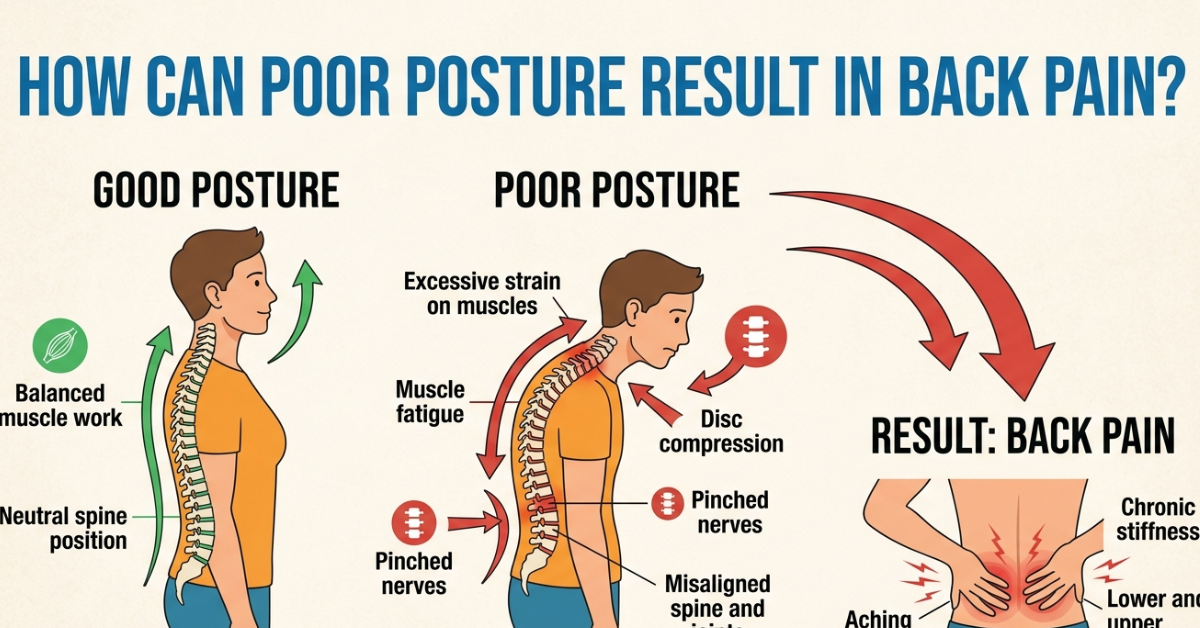
1. Tight Muscles and Muscle Imbalance
One of the main answers to how can poor posture result in back pain is muscle tension.
When you sit or stand incorrectly:
- Some muscles become overworked
- Others become weak and underused
- This creates muscle imbalance
Result:
Tight muscles pull on your spine, causing stiffness and pain in the upper and lower back.
2. Spinal Misalignment and Hyperextension
Another key issue is how posture affects your spine’s natural shape.
Bad posture can:
- Shift the spine out of alignment
- Cause unnatural curves
- Lead to hyperextension or excessive pressure on certain areas
So, how can poor posture result in back pain? a. bad posture can result in tight muscles. b. bad posture hyperextends the spinal column.
Option A and B are correct:
- Tight muscles strain the back
- Hyperextension increases spinal stress
3. Increased Pressure on Joints and Discs
Your spine is made up of vertebrae and soft discs that act as cushions.
Poor posture:
- Increases pressure on spinal discs
- Strains joints and ligaments
- Reduces shock absorption
Over time, this can lead to chronic lower back pain and even disc problems.
4. Reduced Blood Flow and Oxygen Supply
When you slouch, your body compresses certain areas, reducing circulation.
This leads to:
- Muscle fatigue
- Slower recovery
- Increased discomfort in the back
Healthy posture allows better oxygen and nutrient flow to muscles.
5. Weak Core Muscles
Good posture depends heavily on your core muscles.
Poor posture:
- Weakens abdominal muscles
- Shifts pressure to the back
- Makes the spine less stable
This is a major reason people develop long-term back pain.
What Poor Posture Does NOT Do
To clear confusion, let’s look at incorrect statements:
- Bad posture increases back flexibility (False)
- Bad posture reduces stress on joints and tendons (False)
In reality, poor posture does the opposite—it increases stress and reduces flexibility over time.
Long-Term Effects of Poor Posture
If left uncorrected, poor posture can lead to:
- Chronic back pain
- Neck stiffness
- Headaches
- Reduced mobility
- Herniated discs in severe cases
This is why early correction is so important.
How to Improve Posture and Reduce Back Pain
1. Strengthen Core Muscles
Exercises like planks and bridges help stabilize your spine.
2. Stretch Regularly
Focus on:
- Hamstrings
- Hip flexors
- Lower back muscles
3. Ergonomic Workspace Setup
Make sure:
- Screen is at eye level
- Chair supports lower back
- Feet are flat on the ground
4. Take Movement Breaks
Avoid sitting for long periods. Stand up every 30–60 minutes.
5. Practice Awareness
Simply noticing your posture throughout the day makes a big difference.
Quick Summary
| Cause of Poor Posture | Effect on Back |
| Tight muscles | Pain and stiffness |
| Spinal hyperextension | Increased strain |
| Weak core | Poor support |
| Reduced circulation | Fatigue and discomfort |
FAQs
1. How can poor posture result in back pain?
Poor posture causes muscle imbalance, spinal misalignment, and extra pressure on joints, all of which lead to back pain.
2. How can poor posture result in back pain? a. bad posture can result in tight muscles. b. bad posture hyperextends the spinal column.
Both A and B are correct because tight muscles and spinal hyperextension are major causes of pain.
3. Can bad posture cause permanent back damage?
If ignored for years, it can contribute to chronic pain and spinal issues, but early correction usually prevents permanent damage.
4. How long does it take to fix posture?
With consistent effort, improvements can be seen in a few weeks, but full correction may take months.
5. What is the fastest way to improve posture?
Strengthening core muscles, adjusting ergonomics, and staying mindful throughout the day are the fastest methods.
Conclusion
So, how can poor posture result in back pain? It all comes down to imbalance—tight muscles, spinal stress, and reduced support for your body structure.
The good news? Posture is fixable. With small daily changes like better sitting habits, regular movement, and core strengthening, you can significantly reduce back pain and improve your overall health.
If you’re dealing with discomfort, start with your posture today—your back will thank you tomorrow.