
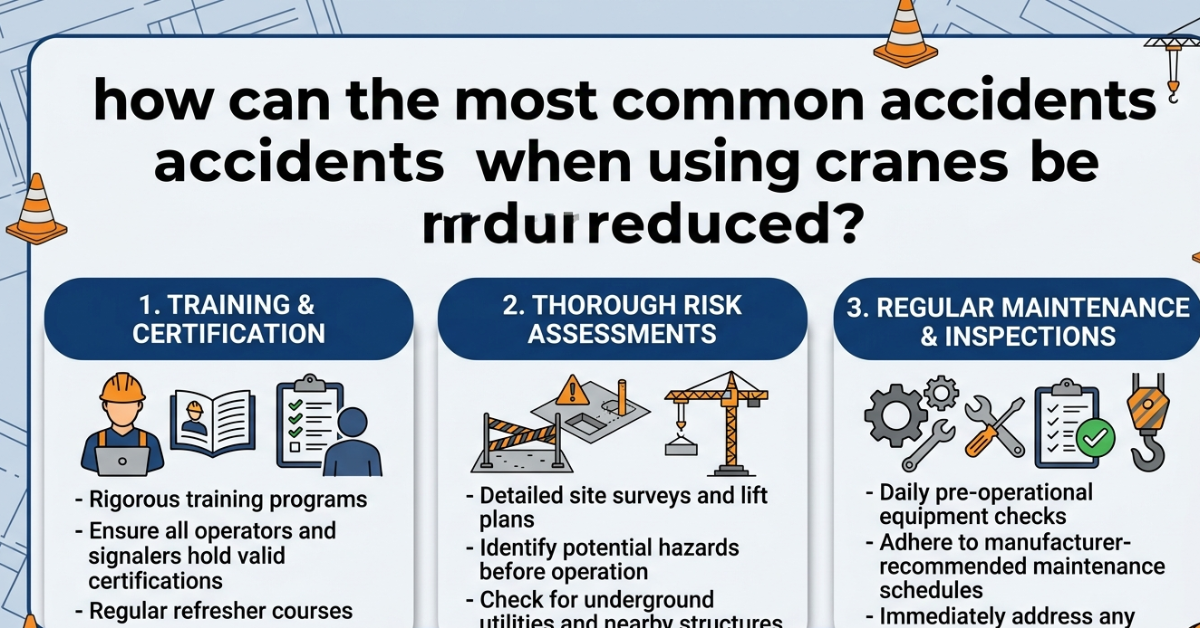

Construction sites rely heavily on cranes, but they also come with serious risks if not handled properly. That’s why understanding how can the most common accidents which occur when using cranes be reduced is so important for workers, supervisors, and site managers.
Crane accidents can lead to injuries, equipment damage, or even fatalities. The good news is that most of these incidents are preventable with proper training, planning, and safety systems in place. In this article, we’ll break down the real causes of crane accidents and practical ways to reduce them on-site.
Why Crane Accidents Happen
Before solving the problem, it helps to understand it.
Most crane-related accidents happen due to:
- Human error or poor communication
- Overloading the crane
- Equipment failure or poor maintenance
- Unsafe weather conditions
- Lack of proper training
Understanding these causes is the first step in learning how can the most common accidents which occur when using cranes be reduced effectively.
Improve Operator Training and Certification
One of the biggest ways to reduce crane accidents is proper training.
Key training improvements include:
- Certified crane operator programs
- Regular refresher courses
- Hands-on simulation training
- Safety rule awareness sessions
Well-trained operators are less likely to make errors that lead to accidents like tipping or collision.
Follow Proper Load Limits and Weight Guidelines
Overloading is one of the most dangerous mistakes in crane operations.
To prevent this:
- Always check load charts before lifting
- Never exceed rated capacity
- Account for wind and movement
- Use load monitoring systems when available
Ignoring weight limits is a major factor in crane failures, so strict adherence is essential.
Regular Crane Inspection and Maintenance
A well-maintained crane is a safer crane.
Daily and routine checks should include:
- Wire ropes and cables
- Hydraulic systems
- Brakes and controls
- Structural components
Preventive maintenance helps identify issues before they become serious hazards.
Improve Communication on Site
Many crane accidents happen due to miscommunication between operators and ground crews.
Best communication practices:
- Use standardized hand signals
- Equip workers with radios
- Assign a dedicated signal person
- Avoid unclear verbal instructions
Clear communication directly supports efforts on how can the most common accidents which occur when using cranes be reduced.
Monitor Weather Conditions Carefully
Wind, rain, and storms can make crane operations extremely dangerous.
Safety steps include:
- Avoid lifting in high winds
- Stop operations during storms
- Monitor weather forecasts daily
- Follow manufacturer wind-speed limits
Weather-related precautions are often overlooked but critical.
Ensure Proper Site Planning and Risk Assessment
Good planning reduces unexpected hazards.
Site planning should include:
- Ground stability checks
- Load path clearance
- Overhead hazard identification
- Crane positioning strategy
A well-planned site significantly reduces operational risks.
Use Modern Safety Technology
Technology plays a big role in improving crane safety.
Helpful tools include:
- Anti-collision systems
- Load moment indicators
- Camera monitoring systems
- Automated shutdown features
These systems help prevent human error and improve decision-making.
Enforce Strict Safety Rules and Supervision
Rules only work when they are followed consistently.
Strong supervision ensures:
- Workers follow safety protocols
- Unsafe behavior is corrected immediately
- Compliance is regularly checked
- Safety culture is maintained
Without enforcement, even the best safety plans fail.
FAQs
1. How can the most common accidents which occur when using cranes be reduced?
They can be reduced through proper training, regular maintenance, safe load handling, and clear communication.
2. What is the main cause of crane accidents?
Human error, especially improper load handling and miscommunication, is one of the most common causes.
3. How often should cranes be inspected?
Cranes should be inspected daily before use and undergo regular detailed maintenance checks.
4. Can weather affect crane safety?
Yes, strong winds and storms can destabilize cranes and make lifting operations dangerous.
5. Why is communication important in crane operations?
Clear communication prevents mistakes between operators and ground staff, reducing accident risks.
Conclusion
Reducing crane-related incidents requires a combination of training, planning, maintenance, and strict safety enforcement. When we understand how can the most common accidents which occur when using cranes be reduced, we realize that most accidents are preventable—not unavoidable.
By focusing on operator skill, equipment safety, and strong site coordination, construction teams can create a safer working environment and significantly reduce risk.
If safety becomes a habit rather than a rule, crane operations become far more controlled, efficient, and secure.