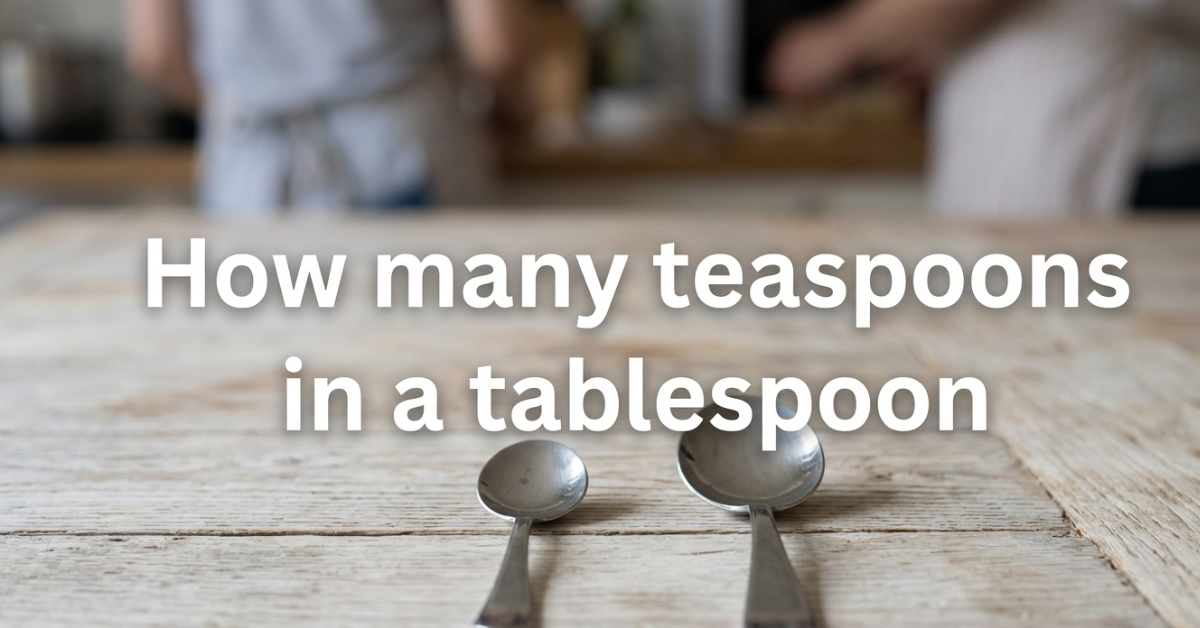

If you’ve ever been halfway through a recipe and suddenly asked yourself how many teaspoons in a tablespoon, you’re definitely not alone. It’s one of those basic kitchen conversions that can make or break a dish if you get it wrong.
Whether you’re baking cookies, mixing sauces, or measuring spices, knowing how many teaspoons in a tablespoon us measurement system uses will save you time and guesswork. In this guide, we’ll break it down in the simplest way possible—plus look at common ingredients like sugar, butter, and flour.
The Simple Answer: Teaspoons to Tablespoon
Let’s get straight to the point.
Standard US measurement:
1 tablespoon = 3 teaspoons
So whenever you’re wondering how many teaspoons in a tablespoon, the answer is always three in the US measurement system.
Why This Conversion Matters in Cooking
Understanding how many teaspoons in a tablespoon? is important because precision affects taste and texture.
For example:
- Too much salt = overly salty food
- Too much baking powder = bitter taste
- Wrong liquid ratio = failed baking recipe
Even small measurement mistakes can change the outcome of your dish.
How Many Teaspoons in a Tablespoon US System?
In the US kitchen measurement system:
- 1 tablespoon = 3 teaspoons
- 1/2 tablespoon = 1.5 teaspoons
- 2 tablespoons = 6 teaspoons
This is the standard used in most American recipes, cookbooks, and food blogs.
So if you ever search how many teaspoons in a tablespoon us, remember: it’s always a 3:1 ratio.
How Many Teaspoons in a Tablespoon of Sugar?
When it comes to ingredients like sugar, the conversion stays the same.
Sugar measurement:
- 1 tablespoon of sugar = 3 teaspoons of sugar
But here’s something important: sugar can be packed or loose, which slightly affects weight—not volume.
Still, for home cooking, the teaspoon-to-tablespoon rule remains consistent.
How Many Teaspoons in a Tablespoon of Butter?
Butter is often measured in tablespoons in recipes, especially baking.
Butter conversion:
- 1 tablespoon of butter = 3 teaspoons
Since butter is semi-solid, recipes usually rely on tablespoons for convenience, but teaspoons work just as accurately when broken down.
How Many Teaspoons in a Tablespoon of Flour?
Flour is a bit trickier because it can be scooped differently.
Flour measurement:
- 1 tablespoon of flour = 3 teaspoons of flour
However, flour should ideally be:
- Lightly spooned
- Not packed
- Levelled off
This ensures more accurate baking results.
Quick Kitchen Conversion Guide
Here’s a simple cheat sheet for how many how many teaspoons in a tablespoon conversions:
- 1 tablespoon = 3 teaspoons
- 2 tablespoons = 6 teaspoons
- 3 tablespoons = 9 teaspoons
- 4 tablespoons = 12 teaspoons
This makes scaling recipes much easier.
Common Mistakes to Avoid
Even though the conversion is simple, people still make mistakes:
Using heaped teaspoons instead of level ones
Confusing UK and US tablespoon sizes
Estimating instead of measuring properly
Small errors can affect baking results more than you think.
Why US Tablespoon Measurements Are Standard in Recipes
Most online recipes use how many teaspoon in a tablespoon us standards because:
- It’s widely accepted globally in digital recipes
- It’s easy to convert (3 teaspoons rule)
- It works for both cooking and baking precision
Read also <<< How Many Weeks in a Year
FAQs
1. How many teaspoon in a tablespoon?
There are 3 teaspoon in 1 tablespoon (US standard).
2. How many teaspoon in a tablespoon US measurement?
In the US system, 1 tablespoon equals 3 teaspoon.
3. How many teaspoon in a tablespoon of sugar?
1 tablespoon of sugar equals 3 teaspoon.
4. How many teaspoon in a tablespoon of butter?
1 tablespoon of butter equals 3 teaspoon.
5. How many teaspoon in a tablespoon of flour?
1 tablespoon of flour equals 3 teaspoon when measured properly.
Conclusion
Knowing how many teaspoons in a tablespoon is one of the simplest but most useful kitchen skills. Whether you’re measuring sugar, butter, or flour, the rule stays the same: 1 tablespoon equals 3 teaspoons in the US system.
Once you remember this, cooking and baking become much easier and more accurate. So next time a recipe confuses you, you’ll know exactly how to convert it without hesitation.