
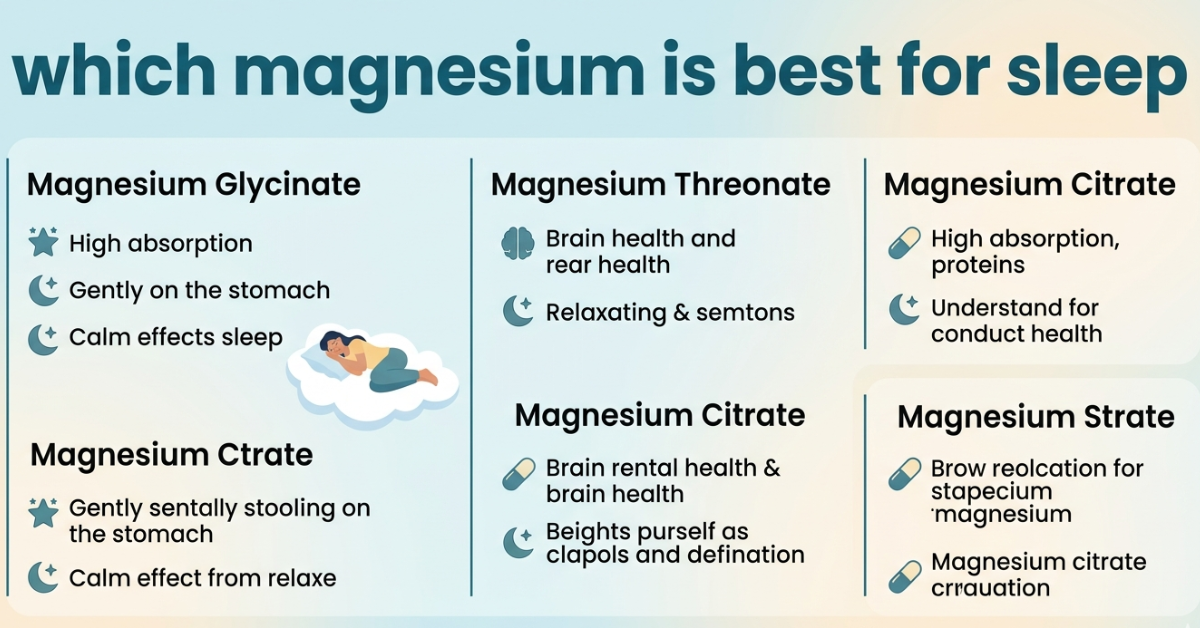

If you’ve been tossing and turning at night, you’ve probably searched which magnesium is best for sleep more than once. It’s one of the most common natural remedies people try when they want better rest without relying on strong medication.
Magnesium plays a huge role in calming the nervous system, relaxing muscles, and supporting deep sleep. But here’s the tricky part—not all magnesium supplements are the same. Some work better for sleep, while others are more helpful for digestion, cramps, or energy.
In this guide, we’ll break down which magnesium is best for sleep, how each type works, and which one fits your specific needs like anxiety, constipation, or muscle recovery.
Why Magnesium Matters for Sleep
Before choosing the best type, it helps to understand why magnesium even matters.
Magnesium supports:
- Relaxation of the nervous system
- Production of sleep hormones like melatonin
- Reduction of stress hormones (like cortisol)
- Muscle relaxation and reduced restlessness
Low magnesium levels are often linked with:
- Trouble falling asleep
- Light or broken sleep
- Nighttime anxiety
- Muscle cramps
So when people ask which magnesium helps you sleep, they’re really asking which form best supports relaxation and calmness.
Which Magnesium Is Best for Sleep?
Let’s get straight to the point.
Magnesium Glycinate (Best Overall for Sleep & Anxiety)
If you’re wondering which magnesium is best for sleep and anxiety, this is the top choice.
Why it works:
- Highly absorbable
- Contains glycine, a calming amino acid
- Gentle on the stomach
- Reduces stress and supports deep sleep
Best for:
- Insomnia
- Anxiety
- Stress-related sleep issues
This is the most recommended form for nighttime use.
Magnesium Citrate (Sleep + Constipation Relief)
If your question is which magnesium is best for sleep and constipation, magnesium citrate is the answer.
Benefits:
- Helps relax the body
- Draws water into the intestines
- Supports bowel movements
Best for:
- Occasional constipation
- Mild sleep support
- Digestive issues
Note: It can cause loose stools if taken in higher doses.
Magnesium Malate (Energy + Muscle Recovery)
If you’re asking which magnesium is best for muscle cramps, this one is useful.
Why it’s different:
- Supports energy production
- Helps muscle recovery
- Less sedating than glycinate
Best for:
- Muscle cramps
- Fatigue
- Daytime use
Not ideal if your main goal is sleep.
Magnesium L-Threonate (Brain + Sleep Quality)
This is a newer form often linked to brain health.
Helpful for:
- Cognitive function
- Relaxation of the brain
- Deep sleep quality
If your concern is both focus and sleep, this is worth considering.
Magnesium for Blood Pressure & Heart Health
If you’re wondering which magnesium is best for high blood pressure, glycinate and taurate are commonly used.
They may help:
- Relax blood vessels
- Support heart rhythm
- Reduce stress-related BP spikes
Always consult a healthcare professional for cardiovascular concerns.
Which Magnesium Makes You Poop?
Let’s answer this common question clearly:
which magnesium makes you poop?
Magnesium citrate and magnesium oxide are most known for this effect.
They:
- Pull water into the intestines
- Stimulate bowel movements
- Work quickly for constipation relief
But they are not the best choice for sleep-focused use.
Which Magnesium Is Best for Migraines?
For migraine support, research often points to:
- Magnesium glycinate
- Magnesium citrate
- Magnesium L-threonate
They may help by:
- Reducing nerve excitability
- Supporting blood flow
- Lowering stress triggers
Which Magnesium Is Best for Weight Loss?
Let’s be honest—magnesium is not a direct weight loss supplement.
However, it may indirectly help by:
- Improving sleep (better metabolism regulation)
- Reducing stress eating
- Supporting energy balance
No specific form is a “fat burner,” despite online claims.
Quick Comparison
| Magnesium Type | Best For | Sleep Friendly |
| Glycinate | Sleep, anxiety | ⭐⭐⭐⭐⭐ |
| Citrate | Constipation | ⭐⭐⭐ |
| Malate | Muscle cramps | ⭐⭐ |
| L-Threonate | Brain + sleep quality | ⭐⭐⭐⭐ |
| Oxide | Laxative effect | ⭐ |
How to Choose the Right Magnesium
Here’s a simple way to decide:
- If your main issue is sleep → Magnesium Glycinate
- If you also have constipation → Magnesium Citrate
- If you have muscle cramps → Magnesium Malate
- If you want brain + sleep support → Magnesium L-Threonate
FAQs
1. Which magnesium is best for sleep?
Magnesium glycinate is generally the best for sleep due to its calming effect on the nervous system.
2. Which magnesium is best for sleep and anxiety?
Magnesium glycinate is most recommended for reducing anxiety and improving sleep quality.
3. Which magnesium is best for sleep and constipation?
Magnesium citrate works well for both mild sleep support and relieving constipation.
4. Which magnesium helps you sleep fastest?
Glycinate is often preferred because it promotes relaxation without strong digestive effects.
5. Can magnesium help with muscle cramps at night?
Yes, magnesium malate and glycinate can help reduce nighttime cramps.
Conclusion
If you’re still asking which magnesium is best for sleep, the simplest answer is magnesium glycinate—it’s gentle, calming, and highly effective for most people struggling with rest.
That said, the best magnesium really depends on your personal needs. Whether you’re dealing with anxiety, constipation, muscle cramps, or migraines, there’s a specific type that fits your situation.
Start with your main symptom, choose the right form, and give it time to work. And if you want better sleep overall, magnesium can be a simple but powerful piece of the puzzle—especially when combined with good sleep habits.